The best time to visit Tokyo is late March to May or mid-October to early December. Cherry blossom peaks around 31 March on average, and late November brings autumn leaves. June brings the rainy season, July and August average highs of 30 to 31°C, and September and October are the wettest months.
The best time to visit Tokyo is late March to May or mid-October to early December. Spring brings the cherry blossom, which the Japan Meteorological Agency (JMA) puts at full bloom on 31 March in a normal year. Late autumn is drier than early autumn, the sun comes back, and the ginkgo trees turn yellow around 23 November.
The months to plan around are June (rainy season), July and August (heat, with highs over 30°C) and September to October (the wettest stretch of the year, and typhoon season). Tokyo is still worth visiting in all of them. You just pack and plan differently.
Tokyo weather by month
Figures are JMA normals for central Tokyo, 1991 to 2020. Events are for 2026 unless marked as normal dates.
| Month |
Avg high / low |
Rain |
Sunshine |
What happens |
| January |
9.8°C / 1.2°C |
60 mm |
193 h |
New Year; many businesses shut for a few days; SHIBUYA SKY closed 1 January |
| February |
10.9°C / 2.1°C |
57 mm |
170 h |
Driest and coldest stretch; clearest Fuji views |
| March |
14.2°C / 5.0°C |
116 mm |
175 h |
Cherry blossom opens 24 March (normal); 19 March in 2026 |
| April |
19.4°C / 9.8°C |
134 mm |
179 h |
Full bloom early in the month; Golden Week starts 29 April |
| May |
23.6°C / 14.6°C |
140 mm |
180 h |
Golden Week to 5 May (6 May in 2026); warm and mostly dry |
| June |
26.1°C / 18.5°C |
168 mm |
124 h |
Rainy season from about 7 June (normal); least sun of the year |
| July |
29.9°C / 22.4°C |
156 mm |
151 h |
Rainy season ends about 19 July; Sumida River fireworks (25 July in 2026) |
| August |
31.3°C / 23.5°C |
155 mm |
174 h |
Hottest month; Obon travel peak mid-month |
| September |
27.5°C / 20.3°C |
225 mm |
127 h |
Peak typhoon month; very wet |
| October |
22.0°C / 14.8°C |
235 mm |
129 h |
Wettest month; Halloween in Shibuya |
| November |
16.7°C / 8.8°C |
96 mm |
150 h |
Ginkgo yellow about 23 November, maples about 28 November (normal) |
| December |
12.0°C / 3.8°C |
58 mm |
174 h |
Dry and sunny; year-end rush from late December |
The table hides one thing. September and October are wetter than June, even though June is the month called “rainy season”. June’s rain is steady drizzle and grey skies. Autumn rain comes in heavier bursts, often from typhoons, with sunny days between.
Spring: cherry blossom season
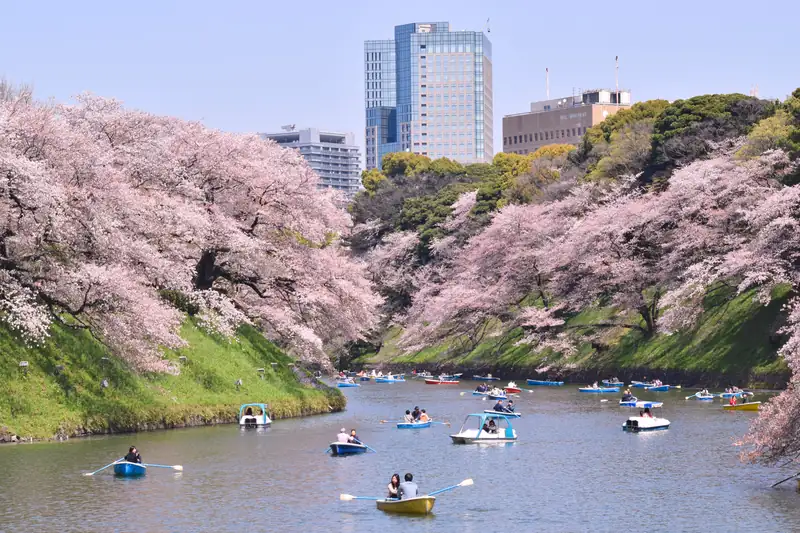
Late March and early April are the busiest weeks of Tokyo’s year for a reason. JMA’s normal dates are 24 March for first bloom and 31 March for full bloom (when 80 percent or more of the flowers on JMA’s sample tree are open). The dates move. In 2026 the Tokyo trees opened on 19 March, five days early, and reached full bloom on 28 March. So if your trip is fixed months ahead, aim for the last days of March and the first days of April, which catch the bloom in most years.
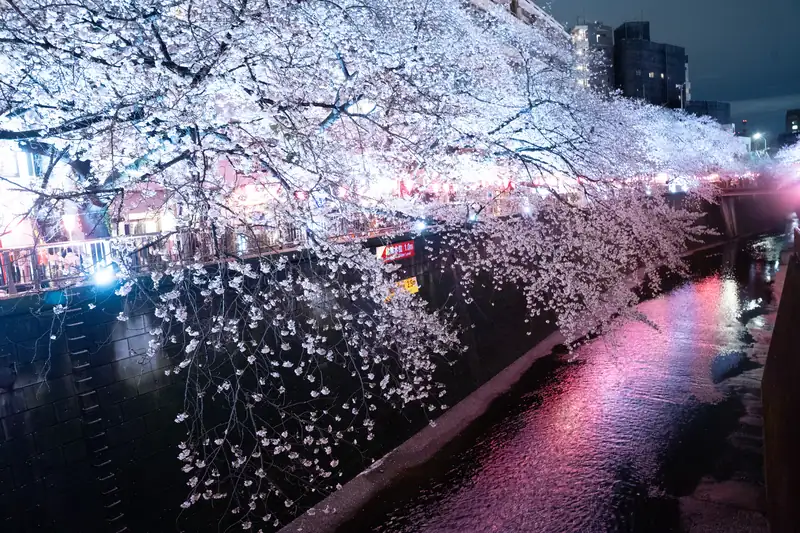
Near Shibuya, the two classic spots are the Meguro River in Nakameguro, with lanterns along the water at night, and Yoyogi Park, where cherry trees bloom beside the pond.
Tokyo in March
Early March is cool (average high 14°C) and quieter than April. Late March is blossom time, and every popular spot is busy. JMA’s March rainfall is double February’s, so pack a light waterproof.
Tokyo in April
April is close to ideal: average highs of 19°C, the blossom in its first days, and the rainy season still two months off. The one thing to watch is Golden Week. Japan’s national holidays fall close together from 29 April to 5 May (in 2026 there was an extra substitute holiday on 6 May; in 2027 the holidays are 29 April and 3 to 5 May). JNTO, Japan’s national tourism board, names Golden Week as one of the three busiest travel periods in the country, with packed trains and shinkansen bookings essential.
Summer: rain, then heat
The rainy season in the Kanto region normally runs from about 7 June to 19 July. In 2026 it started on 2 June, ended on 19 July and brought 136 percent of normal rainfall. In 2025 it ended in June. The dates vary more than most visitors expect.
Then comes the heat. August averages a high of 31.3°C and a low of 23.5°C, and nights barely cool down. Plan outdoor sightseeing for early morning and evenings, and use the afternoons for museums, shopping and long lunches. Summer evenings are when Tokyo’s fireworks festivals happen: the Sumida River display was held on 25 July in 2026.
Mid-August is Obon, when much of Japan travels home. JNTO notes that planes, trains and highway buses sell out, but big cities themselves are quieter than usual.
Autumn: typhoons first, then the best weather
September and October are Tokyo’s wettest months, at 225 mm and 235 mm. Typhoon season peaks here. JMA’s 1991 to 2020 normals count 0.8 typhoons passing within 300 km of the Kanto region in August, 1.2 in September and 0.7 in October.
Most weeks in these months pass without one. Still, keep one day in your plans free, so a storm costs you a rearranged day rather than a booked tour.
Tokyo in October
October averages a high of 22°C, comfortable for walking, but it is also the wettest month of the year and typhoons can still come close. Bring a compact umbrella and keep plans flexible.
Shibuya at the end of October is its own case. Halloween crowds once filled the area around the crossing, and the ward now discourages them. For 2026, Shibuya City closed roads around the station from 16:00 on 30 and 31 October, boarded off the Hachiko statue from 30 October to 1 November and asked shops not to sell alcohol on the night of the 31st. Street drinking near the station has been banned every night from 18:00 to 05:00 since 1 October 2024. See Shibuya at night for the details.
Tokyo in November
November is the most underrated month. Rain falls by more than half from October’s figure, highs sit around 17°C, and sunshine picks up. JMA’s normal date for the Tokyo ginkgo trees turning yellow is about 23 November and for maple colour about 28 November, so late November into early December is the autumn leaf season in the city.
Winter: cold, dry and clear
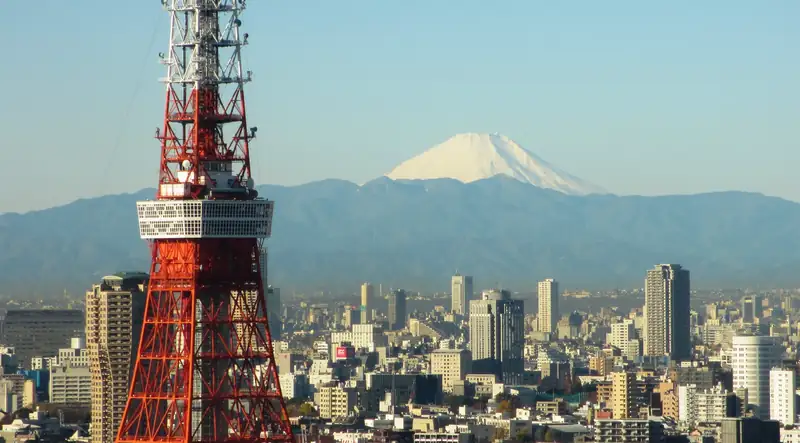
December to February is the driest and sunniest part of the year: January averages 193 hours of sun and 60 mm of rain. Highs are around 10°C, lows near freezing. Winter is also when Mount Fuji is most often visible. A Fuji City record for 2025 shows the whole mountain clear at 8:00 on 22 of 28 February mornings, against 2 of 30 in June. If a Mount Fuji day trip from Tokyo matters to you, winter is the season to book it.
The catch is New Year. Many businesses close for several days around 1 January, transport is busy in the last week of December, and SHIBUYA SKY is closed on New Year’s Day.
New Year’s Eve in Shibuya
There is no official countdown. Shibuya’s crossing countdown, which drew more than 100,000 people in 2019, was cancelled again for 2025/26, the sixth time. The ward fenced off the Hachiko statue from 06:00 on 31 December to 01:00 on 1 January, nearby convenience stores paused alcohol sales, and the 18:00 to 05:00 drinking ban applied. Plans for 2026/27 had not been announced by 23 October 2026.
So when should you go?
- First trip, flexible dates: the first week of April, or the second half of November.
- Cherry blossom: 25 March to 5 April, and book rooms early. Our where to stay in Tokyo guide compares the areas.
- Lowest chance of rain: December to February.
- Mount Fuji views: November to February, on an early start.
- Avoid if you can: Golden Week (29 April to 5 May), mid-August, and the New Year week.