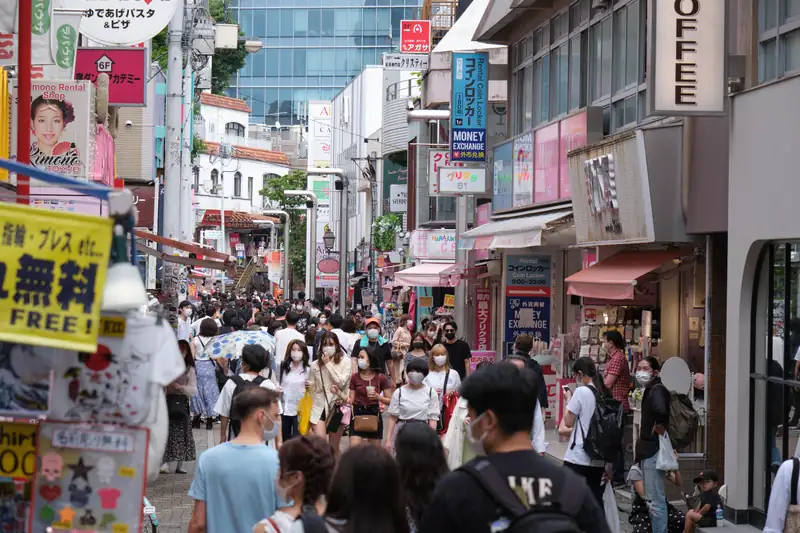
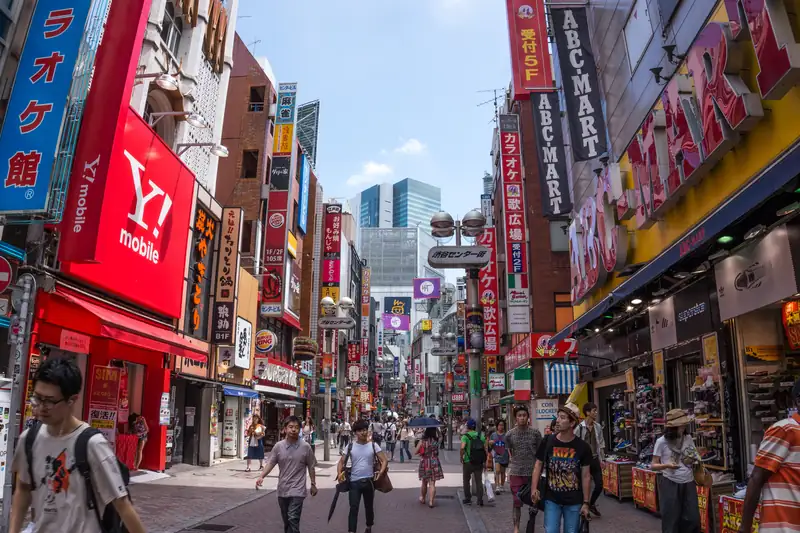
Takeshita Street is a pedestrian shopping lane of about 400 m that starts opposite the Takeshita exit of JR Harajuku Station, one Yamanote stop and 2 minutes from Shibuya. It sells youth fashion, accessories, character goods and crepes. It is free, very crowded at weekends, and best walked on a weekday morning.
Takeshita Street is a pedestrian lane of about 400 m in Harajuku, starting right opposite the Takeshita exit of JR Harajuku Station. From Shibuya it is one stop on the JR Yamanote Line, 2 minutes and ¥155 with an IC card. It costs nothing to walk and is the heart of Harajuku’s youth fashion scene, which also makes it very crowded at weekends.
The shops sell youth fashion, accessories, character goods and sweets, and the street is where the crepes Harajuku is known for are eaten on the go. Come for the people-watching as much as the shopping.
How to get to Takeshita Street from Shibuya
| Route |
Time |
Cost |
Arrive at |
| JR Yamanote Line, Shibuya to Harajuku |
2 min |
¥155 IC / ¥160 ticket |
Takeshita exit, top of the street |
| On foot via Meiji-dori |
15 to 20 min |
Free |
Meiji-dori end, bottom of the street |
Checked October 2026.
Take the train if you want to start at the station end and then carry on to Omotesando or back to Shibuya on foot. Leave JR Harajuku by the Takeshita exit (the old wooden station building on this side was taken down after 2019, and JR East plans to rebuild it in its original style, with work starting in 2026). The street begins across the road.
A short history
The street’s own shopping association, the Harajuku Takeshita Street Shopping Association, keeps a timeline. It counts 1974 as “year one”, when a shop called Parefrançais opened in March. By 1976 the lane was turning into a shopping street, and the association itself was founded in 1977.
Then came the takenoko-zoku, teenage street-dance groups that Takeshita Street became known for in the 1980s (the association dates their first appearance to 1979, on Omotesando), and the celebrity-branded “talent shops”. The first opened on Takeshita Street in 1987; by 1989 Harajuku had 52 of them, 42 on this one street. In 2000 the association began campaigning against street vending and touting, which explains the warnings on its site today.
What you will find
Travel guides list bags, shoes, accessories, jewellery, toys and costumes, crepe stands and even animal cafes. Much of it is aimed at teenagers and priced for them, so it is better for browsing and souvenirs than for serious shopping.
Crepes are the snack everyone seems to carry. Marion Crepes is often credited with starting the style: travel sites say it began as a food cart in 1976 and moved to Takeshita Street a year later, though its claim to be Japan’s first crepe shop is disputed.
If you want bigger names, head to the bottom of the street and cross to Laforet Harajuku and Omotesando. For quieter independent shops, walk south down Cat Street towards Shibuya.
Rules and manners on Takeshita Street
These come from the shopping association’s own site, checked October 2026:
- Keep left and walk in one direction. The lane is narrow and it is the only way the crowd keeps moving.
- Touting is banned. If someone approaches you, do not stop, do not reply, do not shake their hand and do not take a catalogue. Call the police if you feel pressured.
- Pedestrian-only hours: bollards close the street to vehicles from 11:00 to 18:00.
Shibuya ward also has its own anti-touting ordinance, in force since 1 April 2025, with a stricter zone within 600 m of the Jingumae crossing, near the bottom of the street.
If you buy a crepe, step to the side to eat it rather than stopping in the middle of the flow, and keep your rubbish with you until you find a bin. Since 1 June 2026, Shibuya ward patrol staff can fine anyone they see littering ¥2,000 on the spot, payable cashless.
Best time to visit
Weekday mornings are calmest. Weekends are the most crowded, which is why the association asks everyone to keep left.
If you are planning a full Harajuku morning, do Meiji Jingu first (it opens at sunrise, 5:40 in October), then walk back across the station for Takeshita Street while the shops are opening.
Combining it with a tour
A guided walk is not needed for a street this short, but it helps if you want the whole area in one go. The Meiji Jingu, Harajuku, Shibuya, and Shinjuku Tour is a private half day by train and on foot that names Takeshita Street and Cat Street in its itinerary, along with Meiji Jingu and the Shibuya Crossing.
Getting back to Shibuya
You have two choices. Walk back up the street to JR Harajuku and take the Yamanote Line, 2 minutes to Shibuya. Or carry on to the bottom of the street and walk south along Cat Street, the Kyu-Shibuyagawa promenade, a quieter back lane that links Harajuku and Shibuya. It starts about 7 minutes from JR Harajuku and brings you back to the Shibuya Station area.
Nearby
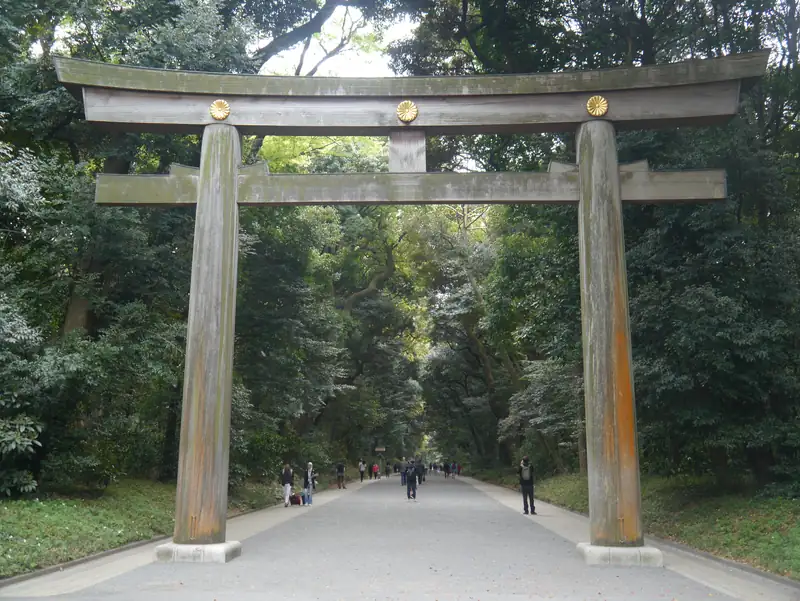
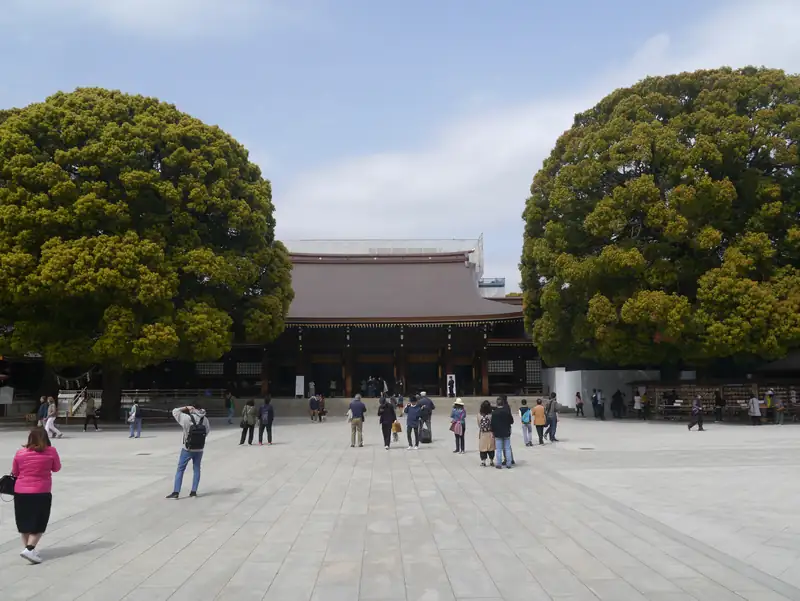
- Meiji Jingu: the shrine gate is on the other side of the station. Free.
- Yoyogi Park: 3 minutes from JR Harajuku.
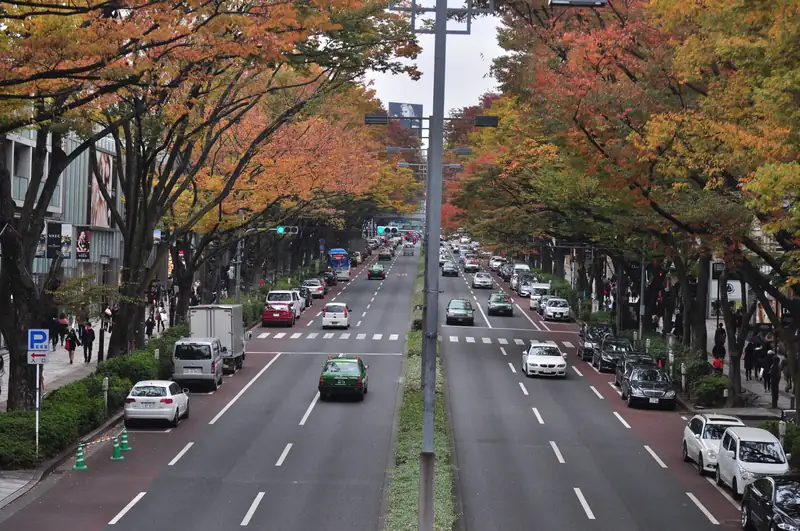
- Omotesando: the zelkova avenue starts a short walk from the bottom of the street.
- Shibuya Crossing: one stop south, or a walk down Cat Street.
For where Takeshita Street fits in a full day, see things to do in Shibuya, and for the bigger stores, Shibuya shopping.