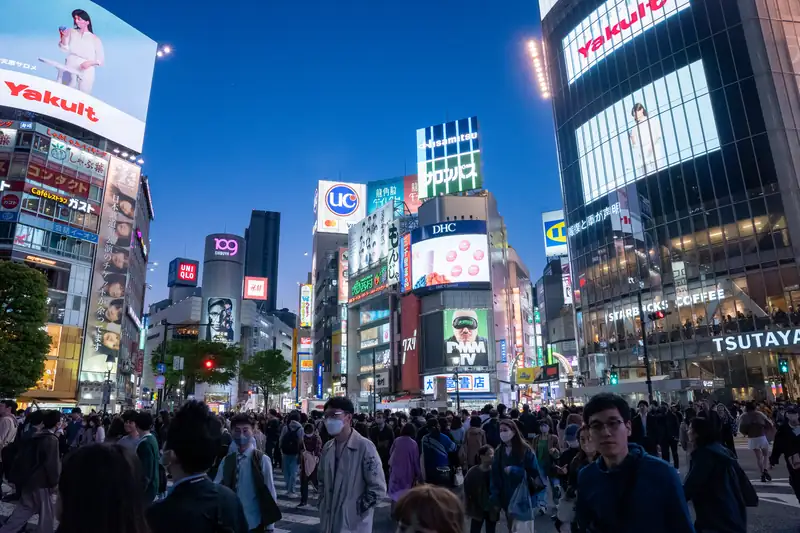
Meiji Shrine (Meiji Jingu) is free to enter and open every day from sunrise to sunset: 5:40 to 16:40 in October, 6:10 to 16:10 in November. It stands in a 70 ha forest beside JR Harajuku Station, one stop and 2 minutes from Shibuya. Allow about an hour, or two with the Inner Garden and Museum.
Meiji Jingu, usually called Meiji Shrine in English, is free and open every day from sunrise to sunset. In October that means 5:40 to 16:40. It is a Shinto shrine established in 1920 for Emperor Meiji and Empress Shoken, set in a 70 ha forest right beside JR Harajuku Station. From Shibuya, take the JR Yamanote Line one stop: 2 minutes, ¥155 with an IC card.
Allow about an hour for the shrine on its own, the shrine says, or two if you add the Inner Garden and the Museum.
Meiji Shrine opening hours by month
The gates open at sunrise and close at sunset, so the times change through the year. These are the shrine’s published hours, checked October 2026:
| Month |
Opens |
Closes |
| January |
6:40 |
16:20 |
| February |
6:20 |
16:50 |
| March |
5:40 |
17:20 |
| April |
5:10 |
17:50 |
| May |
5:00 |
18:10 |
| June |
5:00 |
18:30 |
| July |
5:00 |
18:20 |
| August |
5:00 |
18:00 |
| September |
5:20 |
17:20 |
| October |
5:40 |
16:40 |
| November |
6:10 |
16:10 |
| December |
6:40 |
16:00 |
Some places and facilities inside keep shorter hours, “mainly 9:00 am to 4:00 pm” in the shrine’s words, so if you want more than the forest and the main hall, arrive after 9:00. If you only want the walk and the courtyard, come early.
Entry fees and what costs money
| What |
Price |
Notes |
| Shrine grounds and main hall |
Free |
Open every day of the year |
| Inner Garden (Gyoen) |
¥500 |
A “contribution for maintenance” |
| Meiji Jingu Museum |
¥1,000 adults, ¥900 high-school age and younger |
10:00 to 16:30, last entry 16:00, closed Thursdays |
Checked October 2026.
The Inner Garden was once imperial property, commissioned by Emperor Meiji partly for Empress Shoken. Irises bloom there in June, and the garden also holds Kiyomasa’s Well. The shrine does not publish the garden’s opening hours on its English pages, so check at the gate.
The Meiji Jingu Museum opened in 2019 in a building by Kengo Kuma, the architect of Tokyo’s New National Stadium. It is closed on Thursdays.
Getting to Meiji Shrine from Shibuya
One of the shrine’s entrances is beside JR Harajuku Station, one stop north of Shibuya on the Yamanote Line. The ride takes 2 minutes and costs ¥155 with a Suica or PASMO card or ¥160 with a ticket (checked October 2026). You can also walk from Shibuya in about 15 to 20 minutes.
From the entrance, allow at least another ten minutes to walk to the main buildings. Wheelchairs are available at the entrance. There is nowhere inside to store a suitcase, so leave luggage in a locker at Shibuya or Harajuku first.
The address is 1-1 Yoyogi Kamizono-cho, Shibuya-ku. The shrine sits inside Shibuya ward, next to Yoyogi Park.
Meiji Shrine etiquette
You do not need to be Shinto to visit or to pray. The shrine’s own guide to a visit is short.
At the water basin (temizu):
- Wash your hands.
- Pour water into your hands and rinse your mouth.
- Wash your hands again.
At the main hall (sampai):
- You may put some coins in the offertory box.
- Bow twice.
- Clap your hands twice.
- Bow once more.
The shrine’s rules:
- No photos or video at the main sanctuary where people are praying, and none at the amulet office.
- No video or promotional photography without permission, and no drones.
- Eat, drink and smoke only in the designated areas.
- No running or sports on the grounds.
- Keep to the forest paths, and do not take flowers, branches, nuts or any other living thing into or out of the forest.
The forest
The forest is the part people remember. It covers 70 ha and was planted with 234 kinds of trees donated by regions across Japan, put in by about 110,000 volunteers. The plan was for “an eternal forest that recreates itself”, and the paths feel far from the city station a few minutes away.
The original shrine buildings were destroyed in the Tokyo air raids of the Second World War. The present shrine was completed in October 1958.
You can see the size of the forest from Shibuya. Look north from the SHIBUYA SKY rooftop and the shrine forest and Yoyogi Park show as one dark green block between the Shibuya towers and the Shinjuku skyscrapers.
Practical tips
- Shrine stamps: there is a goshuin (shrine stamp) counter near the main building, which also sells goshuincho stamp books.
- Cash: the amulet office, the Kaguraden and the goshuin counter do not take credit cards, so carry some yen.
- Best season: the shrine says it is worth visiting in every season. June is iris time in the Inner Garden.
- Food: eating and drinking are allowed only in designated areas. The restaurants and gift shop on the grounds take cards and have Wi-Fi.
- Bicycles: leave them in the bicycle lot by the entrance. Bicycles and motorcycles are not allowed on the grounds.
- Lost property: the shrine office number is 03-3379-5511 (Japanese only).
Is there a guided tour?
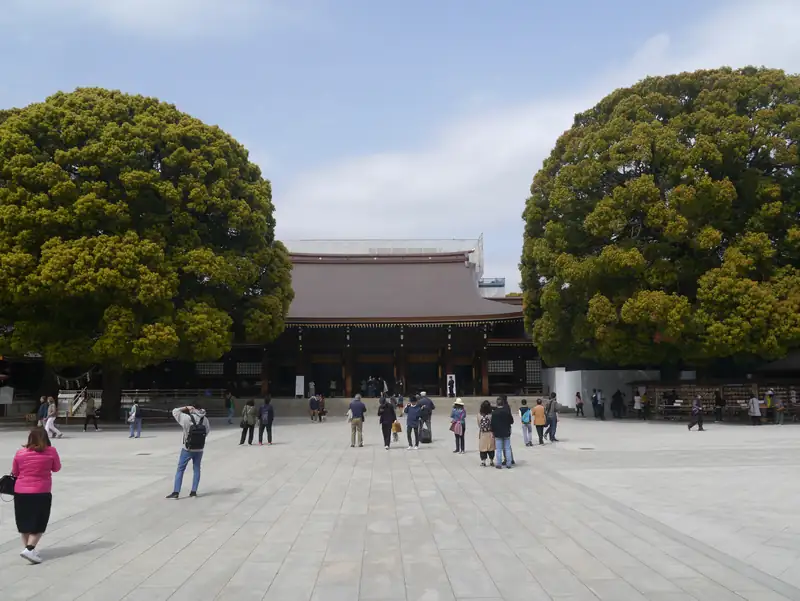
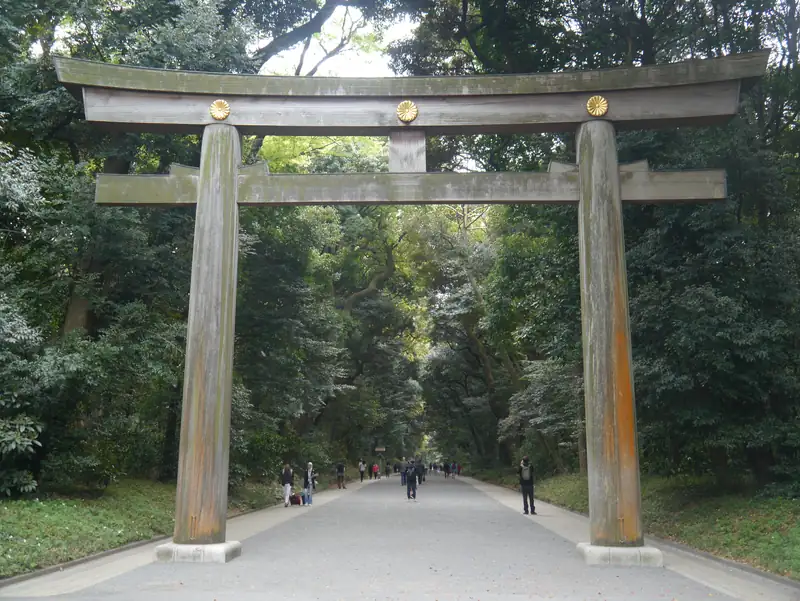
The shrine runs no official guided tours. If you want the background on Shinto and the imperial family, the Meiji Shrine Walking Tour is a small-group walk of about 90 minutes from Harajuku Station. It passes under the great torii and the sake and wine barrels to the main hall, and ends with a tea stop at the forest cafe.
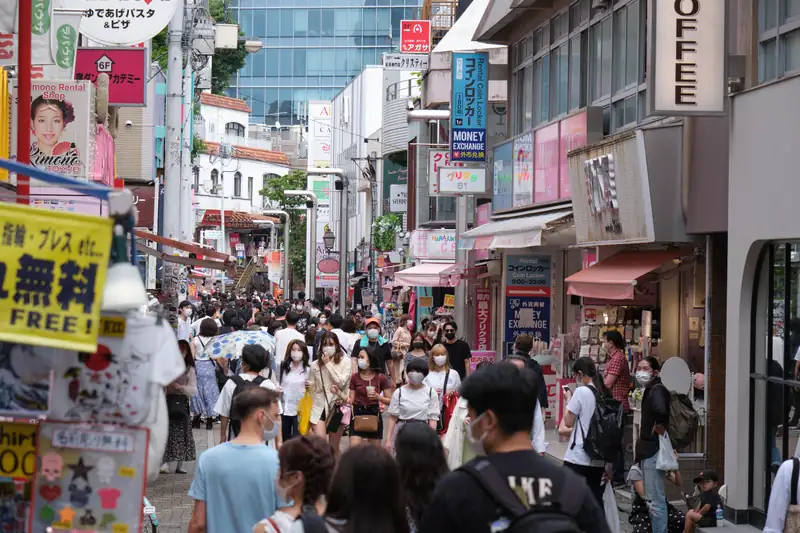
For a longer day, the Tokyo: Meiji Jingu, Harajuku, Shibuya, and Shinjuku Tour is a private half day by train and on foot that adds Takeshita Street, Cat Street and the Shibuya Crossing, then carries on to Shinjuku.
Combining it with Harajuku and Shibuya
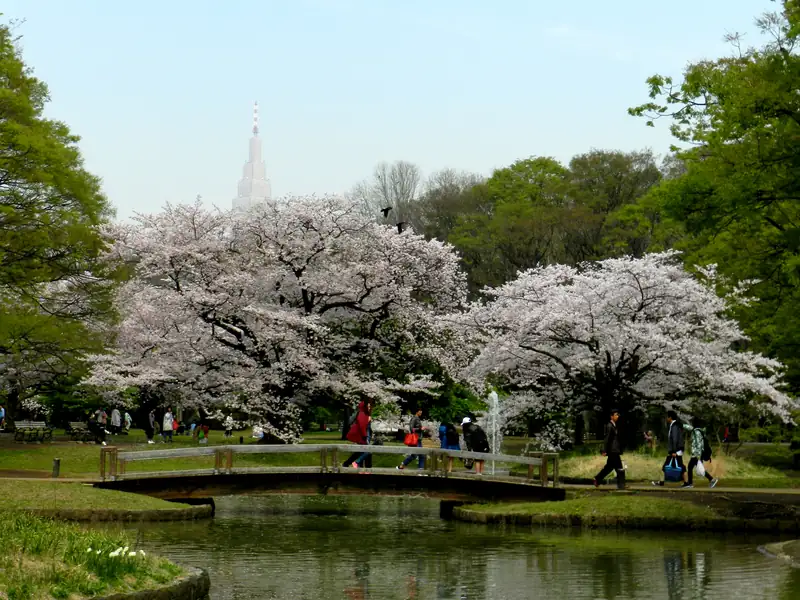
Meiji Jingu works best first thing in the morning, followed by Takeshita Street on the other side of the station and Omotesando, the avenue that was built in 1919 as the shrine’s approach road. Yoyogi Park is next door if you want somewhere to sit afterwards.
From there you can be back at Shibuya Crossing by train in minutes, or walk down Cat Street. For the rest of the day, see things to do in Shibuya and the Harajuku guide.