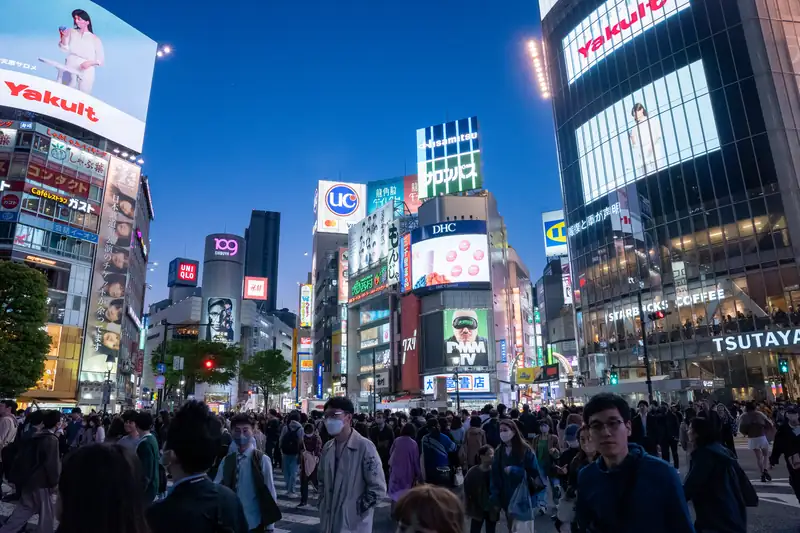
Harajuku is the district one JR Yamanote stop north of Shibuya: 2 minutes by train for ¥155 on an IC card, or 15 to 20 minutes on foot. Go for Takeshita Street's youth fashion and crepes, the quieter shops of Cat Street, and the forest of Meiji Jingu right beside the station.
Harajuku is one stop north of Shibuya on the JR Yamanote Line. The train takes 2 minutes and costs ¥155 with a Suica or PASMO card, so it is the easiest side trip you can make from Shibuya Crossing. You can also walk it in 15 to 20 minutes.
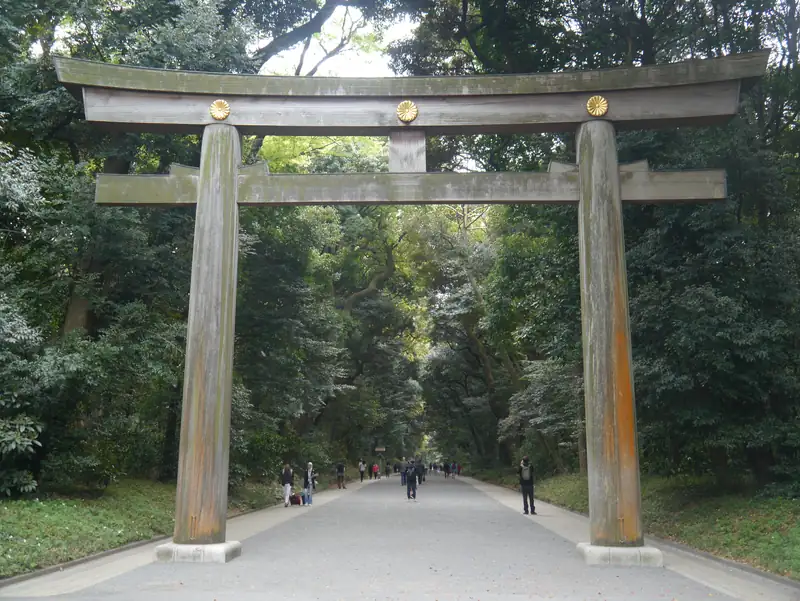
What you get at the other end is a district of two halves. On one side of Harajuku Station is Takeshita Street, a narrow lane packed with teenage fashion, crepe stands and souvenir shops. On the other is the forest of Meiji Jingu, the great Shinto shrine built for Emperor Meiji, where the noise drops away within a few steps of the gate. Between them, and running south back towards Shibuya, are Omotesando and Cat Street.
Getting to Harajuku from Shibuya
| Route |
Time |
Cost |
Notes |
| JR Yamanote Line, Shibuya to Harajuku |
2 min |
¥155 IC / ¥160 ticket |
1 stop, trains every 2 to 4 minutes |
| On foot via Meiji-dori |
15 to 20 min |
Free |
About 1.3 km in a straight line |
| On foot via Cat Street |
20 to 30 min with browsing |
Free |
Quiet back street of small shops |
Checked October 2026. JR East raised its fares on 14 March 2026, so guides written before then quote lower fares. The IC card fare is lower than the paper ticket.
The train is the obvious choice if you are going to Meiji Jingu or Takeshita Street, both of which start at the station. Walking makes more sense if you want Cat Street or Omotesando, because the walk takes you through them. Leave Shibuya Station by the Miyamasuzaka (east) exit, head north up Meiji-dori, and the Cat Street entrance is on your right after about 7 or 8 minutes, before the Jingumae crossing.
Harajuku Station itself is new. The old 1924 wooden building, often called the oldest wooden station in Tokyo, was taken down after JR East decided in 2019 to remove it for safety, and a new station opened on 21 March 2020. JR East said in 2024 that the old design would come back as part of a new building, with work starting in 2026, so you may see building work on the Takeshita side. The Tokyo Metro station next door is called Meiji-jingumae (Harajuku), but there is no indoor link between the two.
What to do in Harajuku
Walk Takeshita Street
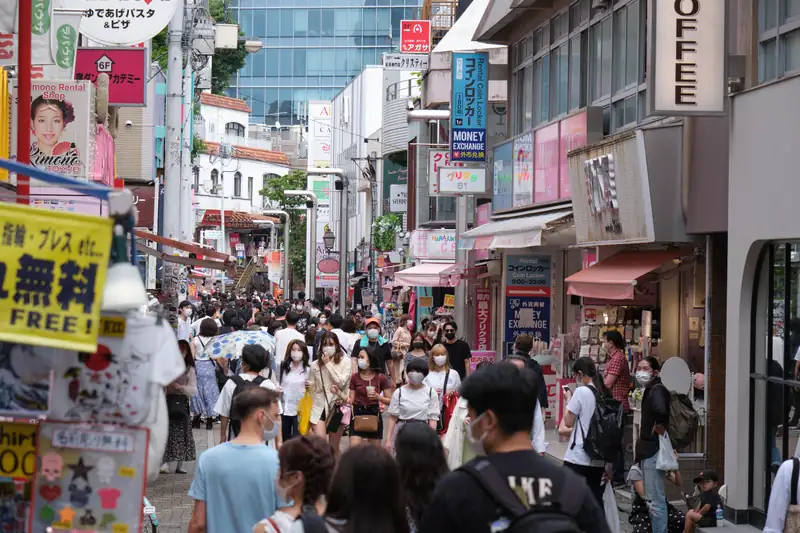
Takeshita Street starts right across the road from the station’s Takeshita exit and runs about 400 m to Meiji-dori. It is where Harajuku’s reputation for youth fashion comes from: the local shopping association dates the street’s start to 1974, when a shop called Parefrançais opened, and says it turned into a shopping street over the next two years.
Today it is clothes, accessories, character goods and crepe stands, much of it aimed at teenagers. It gets very crowded, especially at weekends. The association asks everyone to keep left and walk in one direction, and touting is banned on the street. If someone tries to hand you a catalogue or shake your hand, keep walking.
Visit Meiji Jingu
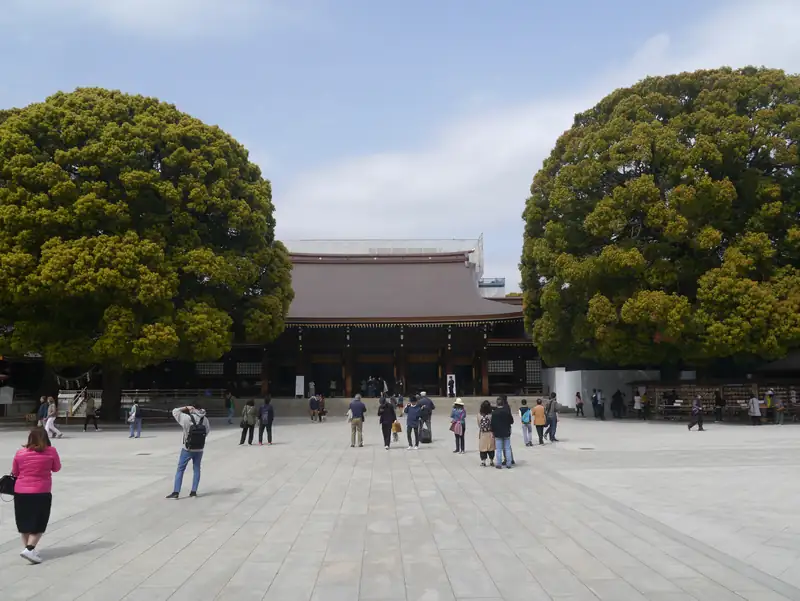
Turn the other way out of the station and you reach an entrance to Meiji Jingu. The shrine was established in 1920 for Emperor Meiji and Empress Shoken and sits in a 70 ha forest planted by about 110,000 volunteers. Entry is free. The walk from the gate to the main hall takes about ten minutes along wide gravel paths, and the shrine says to allow about an hour for a visit.
It opens at sunrise and closes at sunset, which in October means 5:40 to 16:40 and in November 6:10 to 16:10 (checked October 2026).
Browse Cat Street
Cat Street is the local name for the Kyu-Shibuyagawa promenade, a back lane one street off the main road that links Harajuku and Shibuya. It is the calmer alternative to Takeshita Street, a back street of small shops rather than a crush of stalls. It is about 7 minutes on foot from JR Harajuku and 4 from Meiji-jingumae.
Walk it south and it brings you back towards Shibuya Station and Miyashita Park, which turns the trip into a free loop on foot.
Omotesando and Laforet
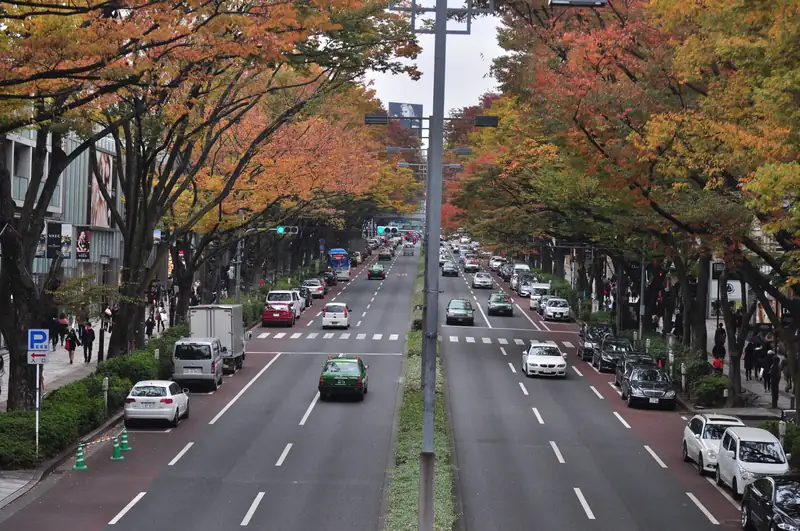
Omotesando, the avenue that leads away from the shrine, was built in 1919 as the shrine’s approach road. It is about 1.1 km long and lined with 163 zelkova trees and with designer flagships by architects such as Toyo Ito and SANAA. Laforet Harajuku, the fashion building at the Jingumae crossing, opened in 1978.
Yoyogi Park
Yoyogi Park is 3 minutes’ walk from the station, behind the shrine forest. It is free, open at all hours, and covers about 54 ha of lawns and trees. On a sunny Sunday it is the best place in Harajuku to sit down. The park was the athletes’ village for the 1964 Olympics, and its one surviving village building, a house used by the Dutch team, reopened as a cafe in April 2026.
A half day in Harajuku
One order that works:
- Start at Meiji Jingu at opening time or by about 9:00. Allow an hour.
- Walk back to the station and through Takeshita Street before it fills up in the afternoon.
- Have lunch or a crepe, then cross Meiji-dori to Omotesando.
- Turn into Cat Street and follow it south to Shibuya, arriving in time for the evening lights at the Crossing.
If you would rather have a guide, the City Unscripted private Shibuya and Harajuku tour covers much the same ground. It starts at the Scramble, takes in a rooftop view and backstreets, then ends in Harajuku for crepes or taiyaki, and you shape the route with a form after booking.
Harajuku wins for youth fashion, cute accessories and small shops. Shibuya wins for big stores and music. Shibuya shopping means Shibuya 109, Parco, Tower Records and department stores; Harajuku means Takeshita Street, Cat Street and Omotesando’s flagships. Since they are one train stop apart, plan a day that covers both.
Practical tips
- Crowds: Takeshita Street is at its worst at weekends. A weekday morning is the easiest time.
- Touts: Shibuya ward’s anti-touting rules, in force since 1 April 2025, have a stricter zone within 600 m of the Jingumae crossing. Ignore anyone who stops you in the street.
- Luggage: there is nowhere to store suitcases inside Meiji Jingu, so use lockers before you go.
- IC card: the IC fare is a few yen cheaper than a paper ticket on the JR hop to Harajuku. JR East sells the Welcome Suica, a visitor card with no deposit, at its Travel Service Center in Shibuya Station among other places.
- Photos at the shrine: Meiji Jingu allows photos almost everywhere, except in front of the main sanctuary where people pray and at the amulet office.
- Where to stay: TRUNK(HOTEL) CAT STREET sits on Cat Street itself, 5 minutes from Shibuya Station. For more options see Shibuya hotels.
Harajuku works best as half of a day that starts or ends in Shibuya. For the rest of that day, see things to do in Shibuya.