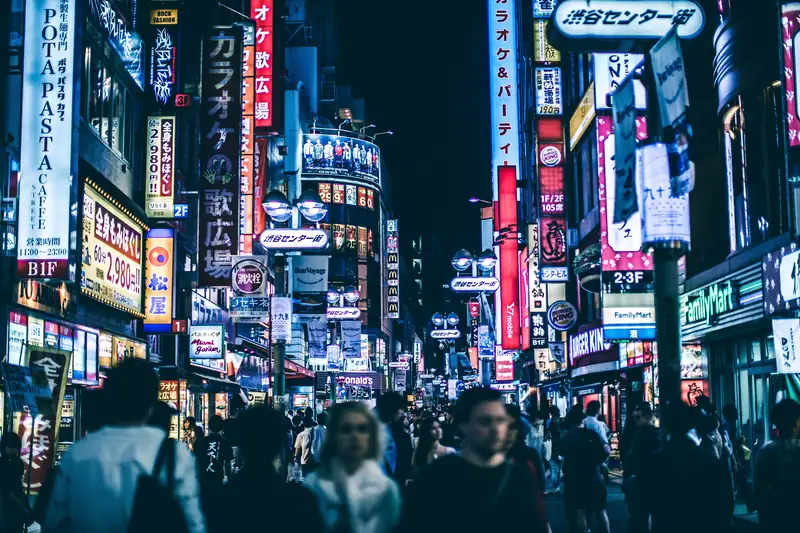
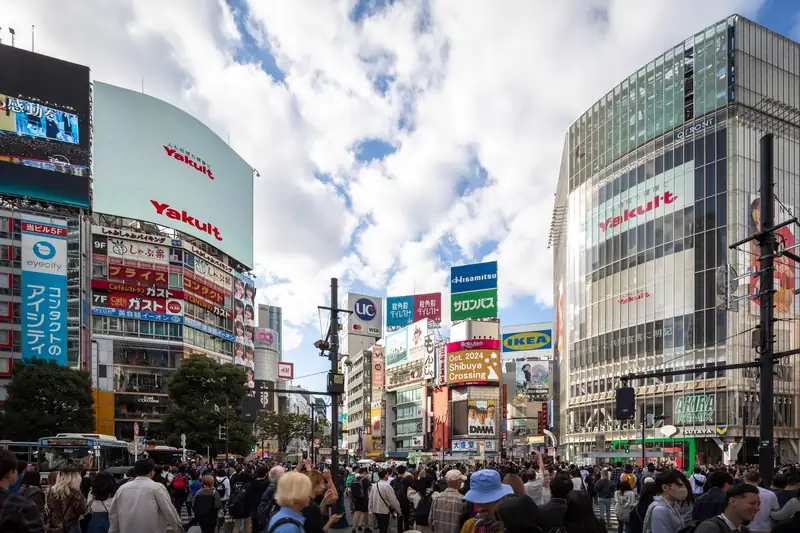
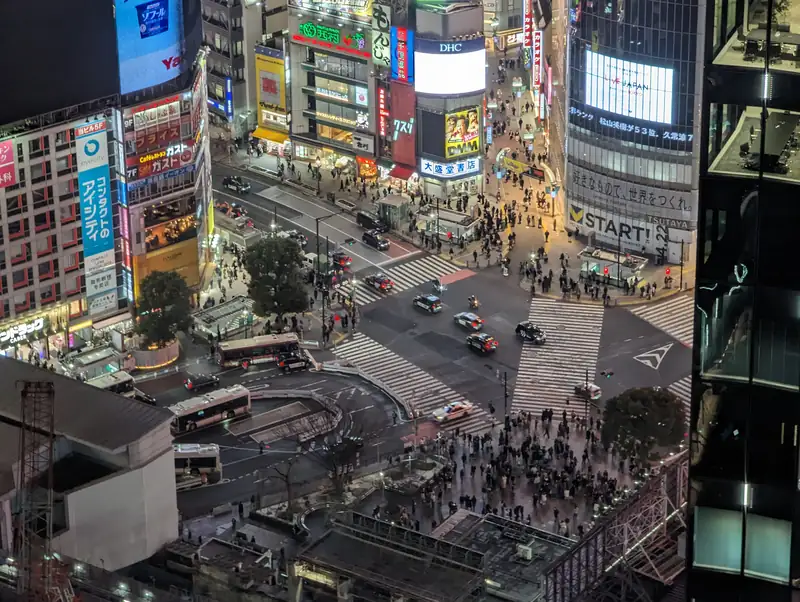
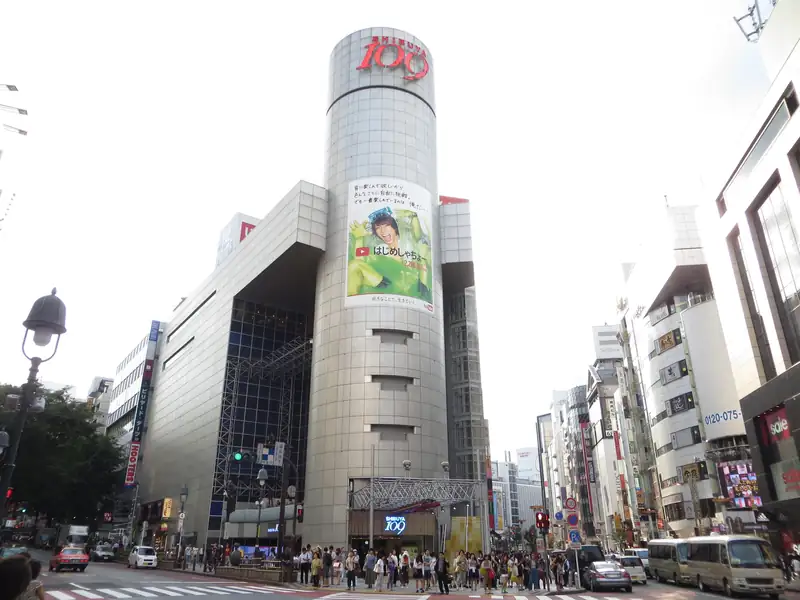
Center Gai is the narrow pedestrian street that starts at Shibuya Crossing and runs into Udagawacho, lined with brand shops, fast food outlets and nightclubs. Dogenzaka is the slope that climbs south-west past Shibuya 109 to Maruyamacho. Both sit inside Shibuya's 18:00 to 05:00 street-drinking ban and its touting-ban zones.
Center Gai is the narrow pedestrian street that leaves Shibuya Crossing and runs west through Udagawacho to Yumeji Street, lined with brand-name shops, fast food outlets and nightclubs. Dogenzaka is the slope on the other side of Shibuya 109, climbing south-west to Maruyamacho. Between them they hold most of the cheap food and late nights in central Shibuya.
Both are free, open at all hours and a minute from the crossing. Both also sit inside the ward’s year-round night drinking ban and its touting-ban zones, which this page covers below. If you have a day in the area, the things to do in Shibuya guide shows where they fit.
Center Gai
The street is in Udagawacho. Its east end is the crossing; its west end is Yumeji Street. It began as a road laid over culverts on the Udagawa River. The name says what the street wanted to be: the “center” of Shibuya.
It has long drawn young people. In the 1990s HMV’s shop on Center Gai helped popularise “Shibuya-kei”, the pop style named after the district, by stocking those records together. Gangs of youths known as “teamers” also gave the street a rough name. In 1997 a 4-ton archway at the entrance collapsed, killing one man and injuring several others.
Why it was renamed Basketball Street
In September 2011 the Shibuya Center shopping-street association announced that the main street would be called “Basketball Street” (Basuketto Booru Sutoriito) from 26 September. Only the central street changed name, not the side lanes. The association’s flyer cited sport and healthy youth, and the association said basketball best stood for Shibuya’s youth, fashion, music and international feel. The Yoyogi National Gymnasium, a basketball venue since the 1964 Olympics, is nearby.
The point was to clean up the street’s image. The name did not stick: most people still call it Center Gai, and so does this site.
Dogenzaka
Dogenzaka is the slope that runs south-west from the station, starting about a minute’s walk from the Hachiko exit with Shibuya 109 at its foot. Bunkamura is also in the district.
The road is old. In the Edo period Shibuya grew as a town on the Oyama pilgrimage road, today’s Route 246, and Maruyamacho, at the top of Dogenzaka, was a geisha district in the Meiji era. Where the name comes from is disputed. A monument on the slope says Owada Dogen, a relative of the Shibuya clan, built a hut here after the clan fell in 1524. An Edo-era guidebook makes him a bandit instead. Historians treat both stories with caution.
The hill above the main road is nicknamed “Love Hotel Hill” for its cluster of love hotels, rented by the hour or overnight. Japan Travel also describes clubs just off Dogenzaka, so the street stays busy late.
Rules that apply on both streets
Checked October 2026:
| Rule |
Detail |
Since |
| Street-drinking ban |
No drinking on streets, in parks or other public places around the station, 18:00 to 05:00 every night; no fine |
1 October 2024 |
| Littering fine |
¥2,000 on the spot, cashless accepted, anywhere in Shibuya ward |
1 June 2026 |
| Ward touting ban |
Touting, or waiting to tout, on public property banned across the ward, with a stricter zone within 700 m of Shibuya Station; ¥50,000 fines for persistent violators |
1 April 2025 (revised ordinance) |
| Sex-business touting |
Also banned in Udagawacho and Dogenzaka 1 and 2-chome under Tokyo’s nuisance ordinance |
1 June 2012 notice |
| Smoking outdoors |
Banned ward-wide outside designated smoking areas, heated tobacco included; ¥2,000 on-the-spot fine |
Fines since July 2019 |
| Halloween 2026 |
Roads around the station closed from 16:00 on 30 and 31 October; shops in the drinking-ban zone asked not to sell alcohol on the 31st |
2026 only |
Both streets are well inside the 700 m zone around the station, and Center Gai lies in Udagawacho, so both are covered by the Tokyo rule too. Shops that take in touted customers also break the ward ordinance. The UK Foreign Office lists Shibuya among Tokyo’s higher-risk nightlife areas for drink spiking and gives two rules: see a priced menu before you go into a bar, and do not follow street touts into one.
Eating and drinking here
Much of Shibuya’s casual eating is on and around these two streets, which is why the food tour below works through both. The Shibuya restaurants guide names places with confirmed 2026 listings. The Shibuya Food Tour (13 dishes and 3 Eateries) walks Center Gai and Dogenzaka in the evening; its listing contradicts itself on what food is included, so read the inclusions before you book.
Seeing it after dark
Center Gai is at its brightest at night, and the backstreets of Udagawacho behind it are easy to miss alone. The Shibuya Night Tour from Neon Streets to Skyline Views walks from Hachiko across the Scramble into Center Gai and those alleys, then spends an hour on the SHIBUYA SKY roof with the ticket included, in groups of up to eight. For more evening ideas see Shibuya at night.
Getting there
From the Hachiko side of Shibuya Station, cross the Scramble. Center Gai starts at the crossing, and Dogenzaka begins by Shibuya 109, about a minute’s walk from the Hachiko exit. For the rest of the district, start at the Shibuya Japan homepage.