Hachiko was an Akita born in November 1923 who lived with Professor Hidesaburo Ueno in Shibuya. Ueno died suddenly on 21 May 1925, and Hachiko kept coming to Shibuya Station for almost ten years until his own death on 8 March 1935, aged 11. His stuffed body is in Tokyo's National Museum of Nature and Science.
Hachiko was an Akita dog who belonged to Hidesaburo Ueno, a professor of agriculture at Tokyo Imperial University, now the University of Tokyo. Ueno died suddenly on 21 May 1925, and for almost ten years afterwards Hachiko kept coming to Shibuya Station. A newspaper article in 1932 made the dog famous across Japan. He died in Shibuya on 8 March 1935, aged 11, and his statue outside the station is now a busy photo spot.
That is the core of the story, and it is well documented. Some of the details that grew up around it are less so.
Hachiko’s life
| Date |
What happened |
| November 1923 |
Born near Odate, in Akita Prefecture |
| January 1924 |
Arrives in Tokyo, a puppy of about 50 days, to live with Professor Ueno in Shibuya |
| 21 May 1925 |
Ueno dies suddenly, aged 53 |
| 1925 to 1935 |
Hachiko keeps coming to Shibuya Station |
| 4 October 1932 |
The Tokyo Asahi Shimbun publishes an article about him |
| 21 April 1934 |
First statue, by Teru Ando, unveiled at the station while Hachiko is alive |
| 8 March 1935 |
Dies in Shibuya; funeral on 12 March |
| 15 August 1948 |
Current statue, by Takeshi Ando, unveiled |
Hachiko was a purebred Akita. His Odate origin was not proven until 1975.
Ueno had him for only about 16 months. The waiting that followed was real, and it lasted from 1925 until the dog’s death in 1935.
How Hachiko became famous
Hachiko was not widely known until 1932. On 4 October that year, the Tokyo Asahi Shimbun ran a piece about the old dog still waiting at the station. Hirokichi Saito supplied the material; who actually wrote the article is disputed. The story spread fast. Within two years there was a bronze statue at the station, and Hachiko was there when it was unveiled on 21 April 1934.
The fame changed how the story was told. A 1934 book, Kazutoshi Kishi’s The Tale of Loyal Dog Hachi-ko, set down a version that is now largely considered fiction. Mayumi Itoh’s 2017 book Hachikō: Solving Twenty Mysteries about the Most Famous Dog in Japan goes through which parts hold up. The fair way to put it is that Hachiko kept coming to the station for almost ten years. Claims about his exact routine, such as meeting the same train every evening, go beyond what the record shows.
Was Hachiko stuffed?
Yes. After he died, his pelt was preserved and mounted by taxidermists, and the mount is on display at the National Museum of Nature and Science in Ueno Park, Tokyo. Visitor guides place him on the second floor of the museum’s Japan Gallery, with Jiro, one of the dogs from Japan’s Antarctic expedition, nearby. Check the museum’s floor map before you go, as displays can move.
One difference is easy to spot. The stuffed Hachiko has both ears up. The Shibuya statue has a drooping left ear.
His organs are elsewhere. The lungs, heart, oesophagus, liver and spleen were removed at the autopsy and preserved in formalin as specimens. Since 2006 they have been shown at the University of Tokyo’s Agricultural and Life Sciences Museum, on the Yayoi campus, beside a bust of Professor Ueno.
How he died
The 1935 autopsy found heartworm, a roundworm infection, as the cause. A later review by University of Tokyo professor Kazuyuki Uchida suggested Hachiko had probably also had a cancer of the lungs that had spread to his heart.
The autopsy also found four yakitori skewers in his stomach. This detail gets repeated as if it explained his death, and it does not: the skewers did him no harm.
Hachiko’s grave in Aoyama Cemetery
Hachiko was cremated and buried beside Professor Ueno at Aoyama Cemetery, in Minato ward. The memorial is a small monument next to Ueno’s grave. One travel guide says the grave faces east and is hard to see from the path, and puts it about seven minutes’ walk from Gaienmae Station on the Tokyo Metro. The cemetery office is at 2-32-2 Minami-Aoyama. Behave as you would at any grave: it is a working cemetery.
The statues
The first statue was made by the sculptor Teru Ando and unveiled on 21 April 1934. During the war it was melted down for the metal. Two sources date that to October 1944; others say 1945. Ando himself died in an air raid on his Yoyogi home and studio in May 1945.
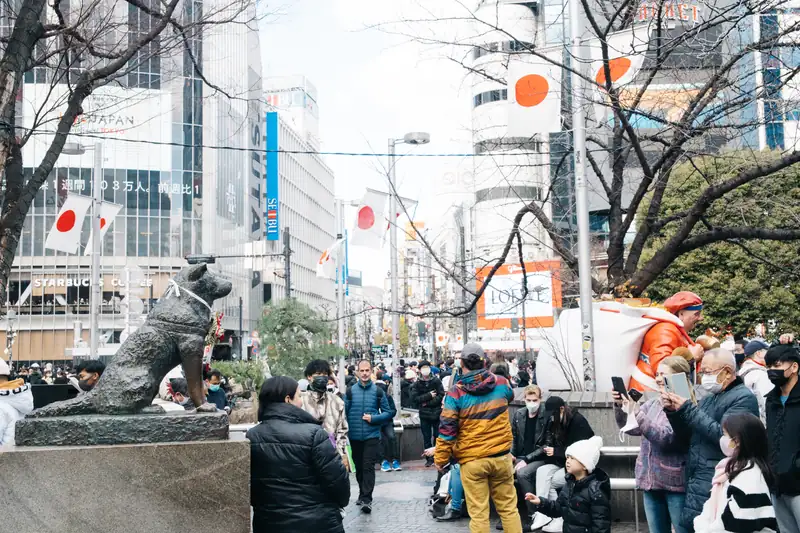
His son, Takeshi Ando, made the replacement, unveiled on 15 August 1948. That is the statue on Hachiko Square today. Our Hachiko statue guide explains how to find it now that JR’s Hachiko Gate has moved, and when it is fenced off.
There are others. Odate Station had a statue from 1935, melted down in 1945 and replaced in 1964 and 1987. And on 9 March 2015, the 80th anniversary of Hachiko’s death, the University of Tokyo unveiled a statue by Tsutomu Ueda of Professor Ueno greeting the dog, on the campus where Ueno taught.
The films
Two films tell the story: the 1987 Japanese film Hachiko Monogatari, and Hachi: A Dog’s Tale (2009), directed by Lasse Hallström with Richard Gere. Both are dramatisations, so treat their details as the film-makers’ rather than the record’s.
Hachiko in Shibuya today
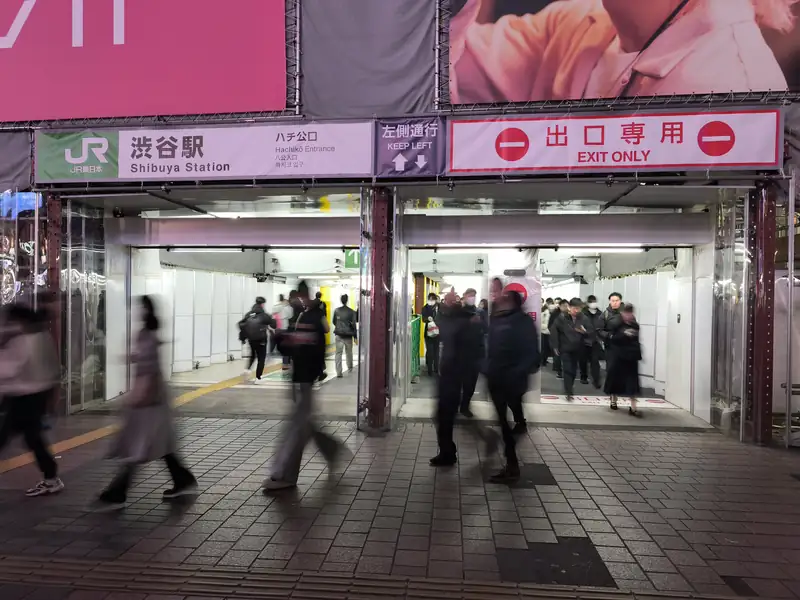
Shibuya still runs on his name. JR’s station gate is called Hachiko Gate, even after it moved away from the square on 26 January 2025. The square is Hachiko Square. A ceramic mural called Hachiko Family decorated the station front from 1990 until it was due to come down for the redevelopment, according to reports in January 2025.
The statue is also where the ward draws its lines on busy nights. It is boarded off from 30 October to 1 November 2026 for Halloween, and it was fenced from 6:00 on 31 December 2025 to 1:00 on 1 January 2026 for New Year. Hachiko Square itself is due to be rebuilt as part of the station plazas by FY2034; we found no report on whether the statue will move during that work.
Where to see Hachiko today
- The statue: Hachiko Square, Shibuya Station, free at all hours.
- His stuffed body: National Museum of Nature and Science, Ueno Park.
- His organs: the University of Tokyo’s Agricultural and Life Sciences Museum, Yayoi campus.
- His grave: Aoyama Cemetery, Minato ward, beside Professor Ueno.
- The 2015 statue: University of Tokyo, with Professor Ueno.
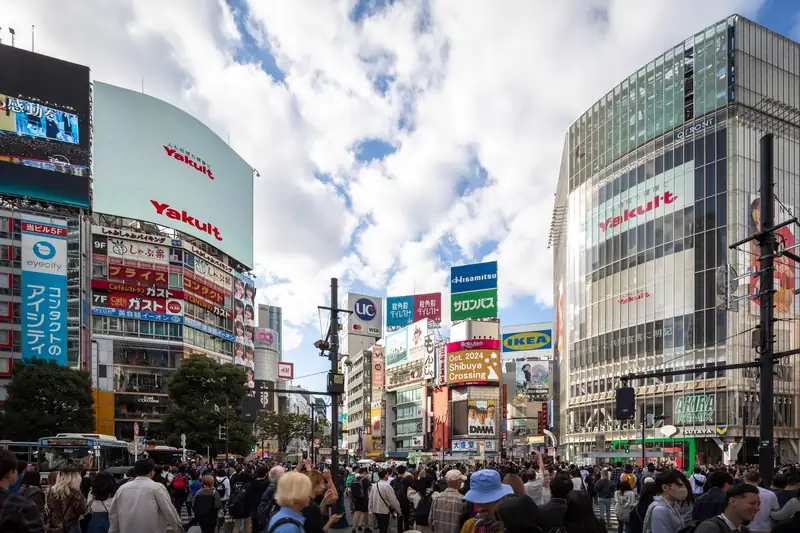
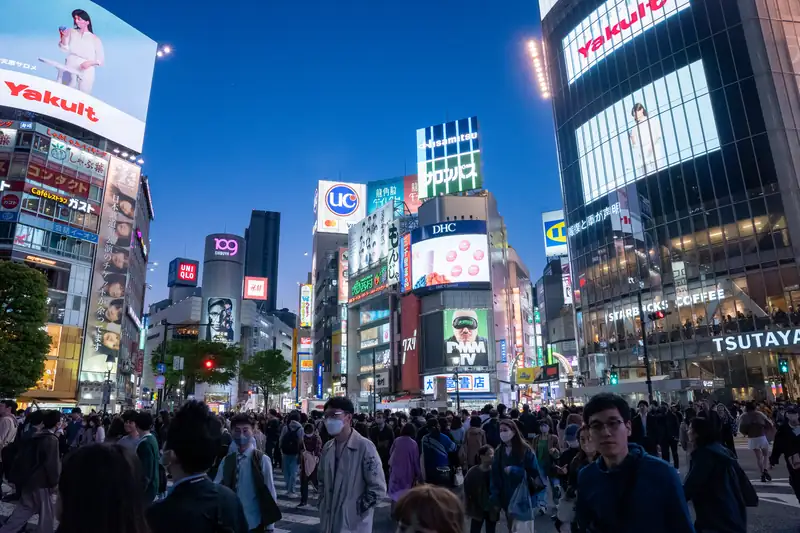
Most Shibuya walking tours start or finish at the statue. The Shibuya Crossing & Hidden Streets Walking Tour ends there, after the crossing and the backstreets. For the rest of the area, see Shibuya Crossing and things to do in Shibuya.